

Author
Noah Xiao
It is Thursday afternoon in S&OP week. The demand planner has just finished lining up the forecast with the promotions calendar Sales sent on Monday, when Sales sends a new one. Two customers have moved their catalogue dates. A launch has slipped by a fortnight. Finance wants to know why volume sits below budget, and the pack for leadership has to be locked by Friday lunchtime.
Most planning teams know some version of that week. Sales and operations planning is supposed to be the moment a business agrees on one set of numbers: what it expects to sell, what it will make and buy to meet that, and what it is all worth. In practice, a surprising share of the cycle goes on keeping the numbers in step with each other, and far less on actually deciding anything.
Underneath the meetings sits a chain of dependent decisions, and each one is only as good as the input it was handed.
Why the Plan Is Stale by Sign-off
Some of the trouble sits inside each step. Forecasts are adjusted by hand, safety stock rules were set years ago and rarely revisited, and orders are built line by line in spreadsheets. The people doing this are capable. The tools simply ask them to make thousands of small judgement calls, and every step adds a little error of its own.
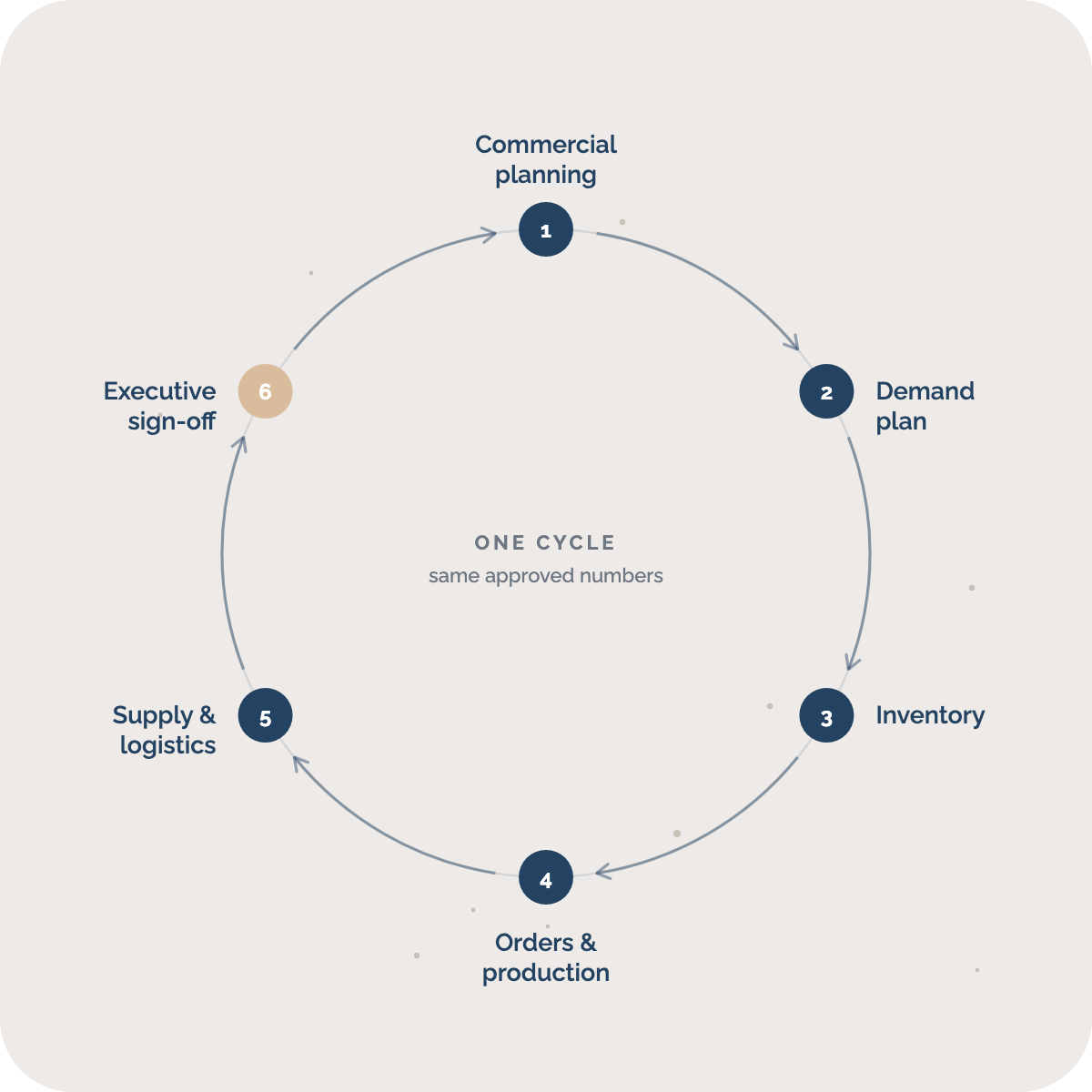
The rest sits between the steps. A typical cycle has six steps: commercial planning, demand planning, inventory, orders and production, supply and logistics, and executive sign-off. Each one passes a file to the next. By the time a change to the promotion plan has worked its way through to orders and supply, the business has moved on. Errors compound along the chain, and nobody sees the whole picture until the leadership pack is printed, by which point it describes last week.
Fix only the first problem and you get six better spreadsheets that still disagree. Fix only the second and you have neatly connected six weak decisions. Good S&OP needs both.
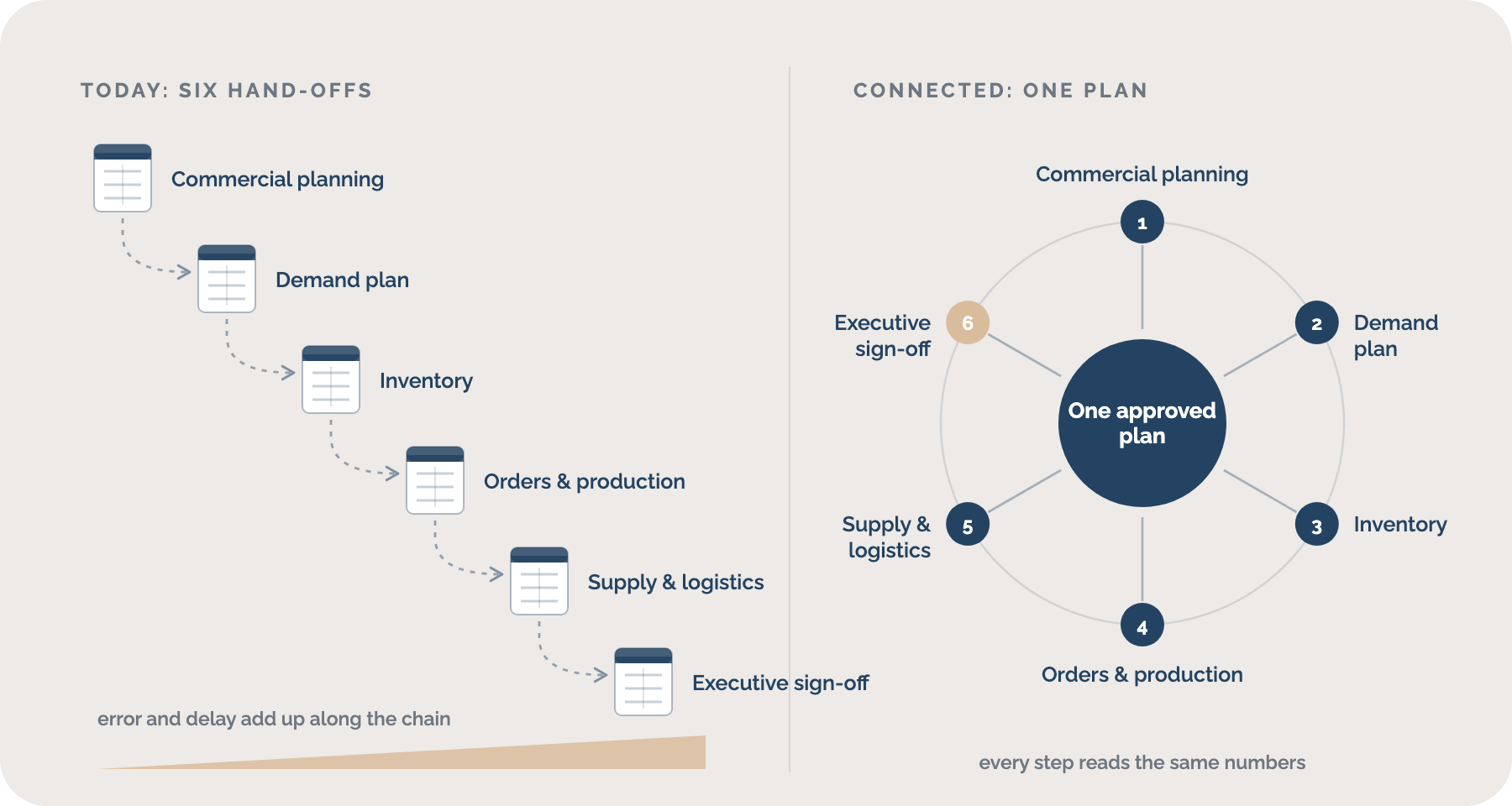
Six hand-offs today, where each step passes a spreadsheet to the next and errors build up, compared with one connected plan that every step reads from
Start From Demand
Every step in S&OP is, in the end, an answer to the same question: what will customers buy? The commercial plan shapes it. Inventory and orders try to meet it. Production and supply make it possible, and finance puts a value on it. That makes demand the natural centre of the plan.
Once you see it that way, the cycle becomes something you can model. Demand moves with the levers the business pulls, such as price, promotion, range and new products, and with the ones it can't, such as the season, the weather and the market.
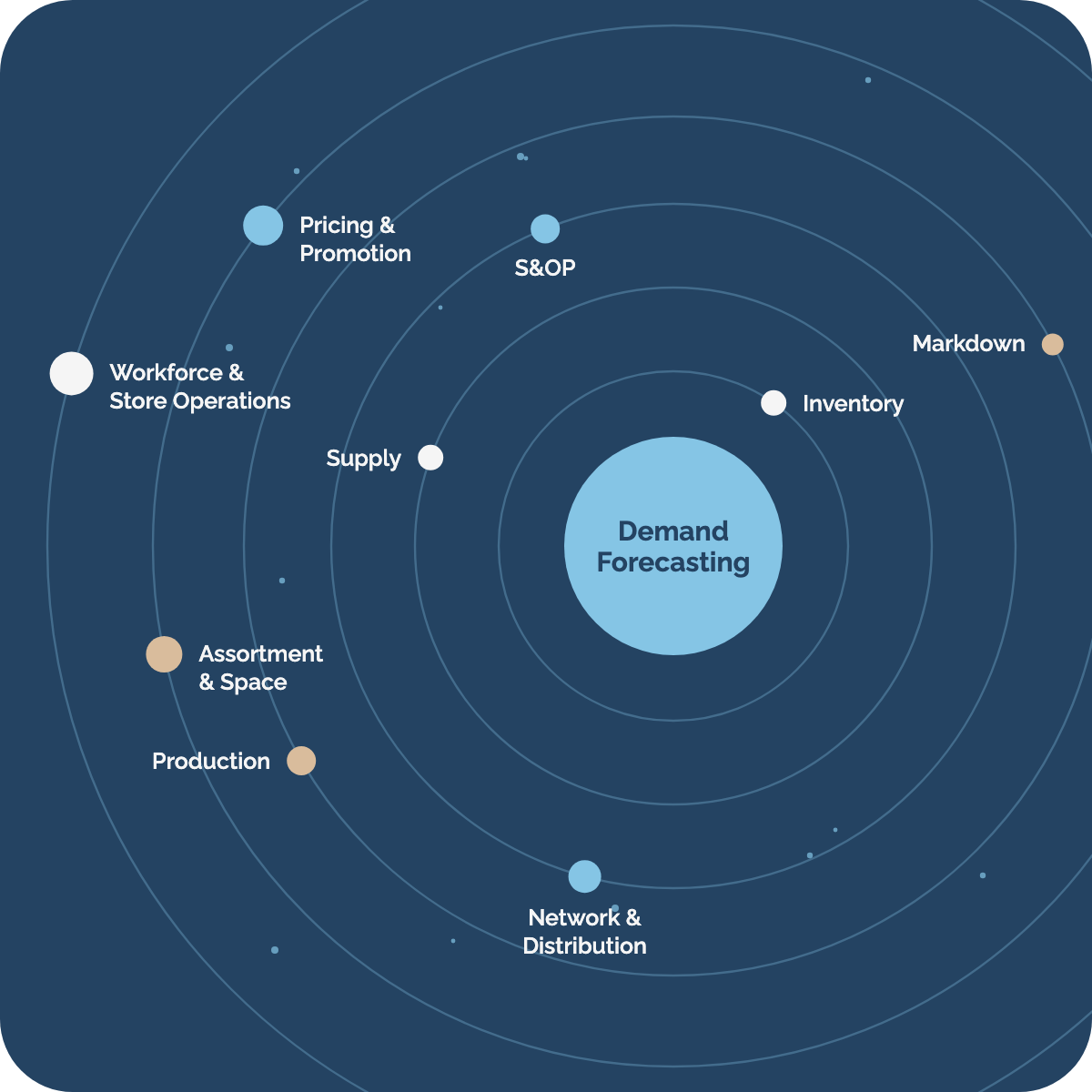
When a forecast genuinely captures how those drivers move demand, you can use it to test a decision before you make it. Change a promotion and you can follow it through: the volume it creates, the stock it needs, the orders and production that follow, and the margin at the end.
That is the idea behind the AI Twin in jahanVerse. It is a working model of your planning cycle in which each step is optimised with the rest of the plan in view: every step reads from the same approved numbers, and any change can be tested against the whole plan before it is committed.
One Cycle, Step by Step
Strictly speaking, inventory, orders and arrival dates sit below S&OP, in weekly execution. They are included here because that is where a plan either holds or falls apart. This is how each step changes when all six share one model of demand.
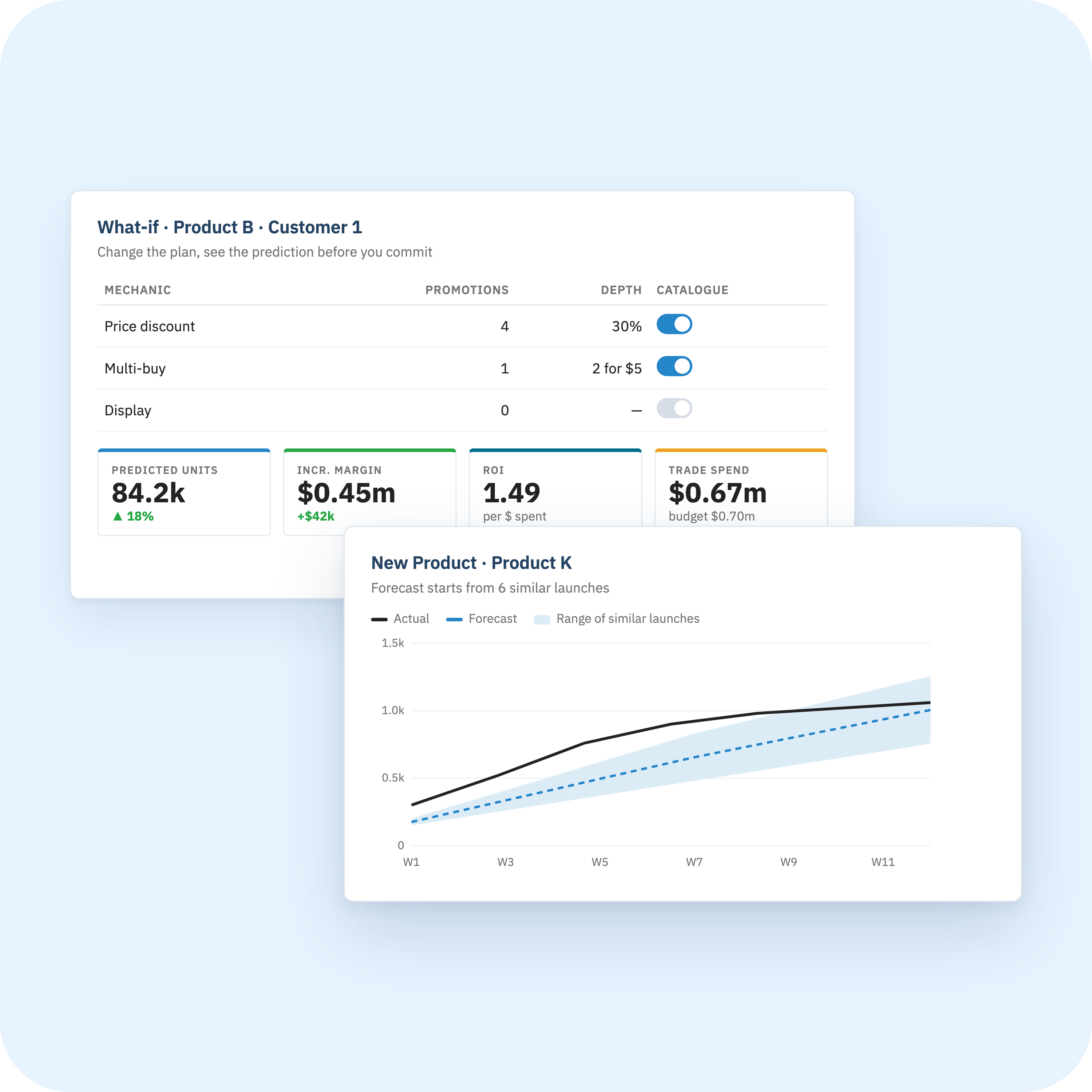
Commercial planning. Promotions and launches are where most forecasts go wrong, so they are planned where their effect is visible. Change the depth or frequency of a promotion for a customer and the predicted volume, margin and ROI update before anything is locked in. A new product borrows evidence from similar launches rather than starting from a best guess.
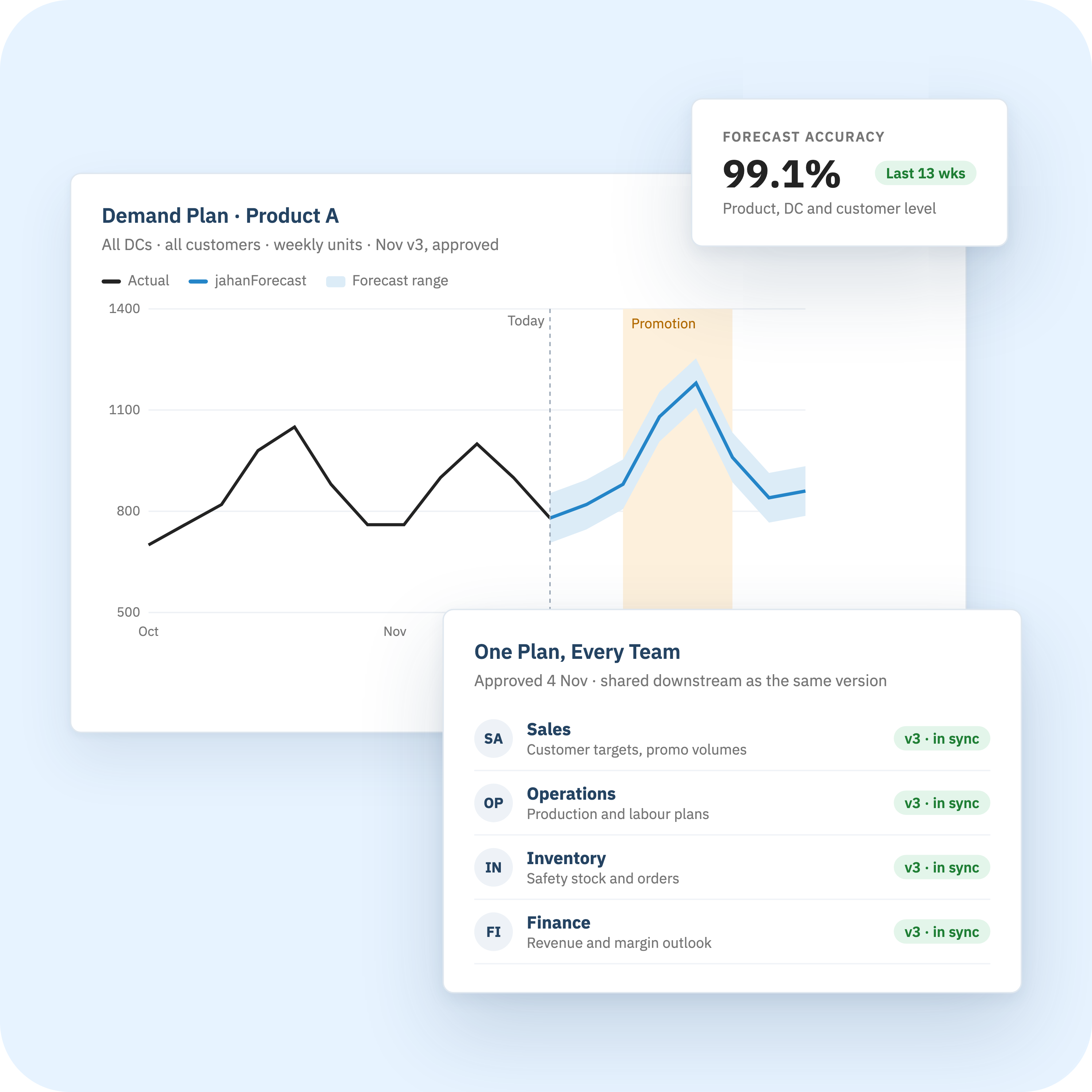
Demand planning. jahanForecast predicts every product, DC and customer, learning from history and from the commercial plan it has just been given. Planners still adjust where they know something the model doesn't, and each adjustment carries a reason. Once approved, the plan is locked as a named version, and every team downstream works from that version. When a number looks odd, the jahanVerse agent can show the drivers behind it.
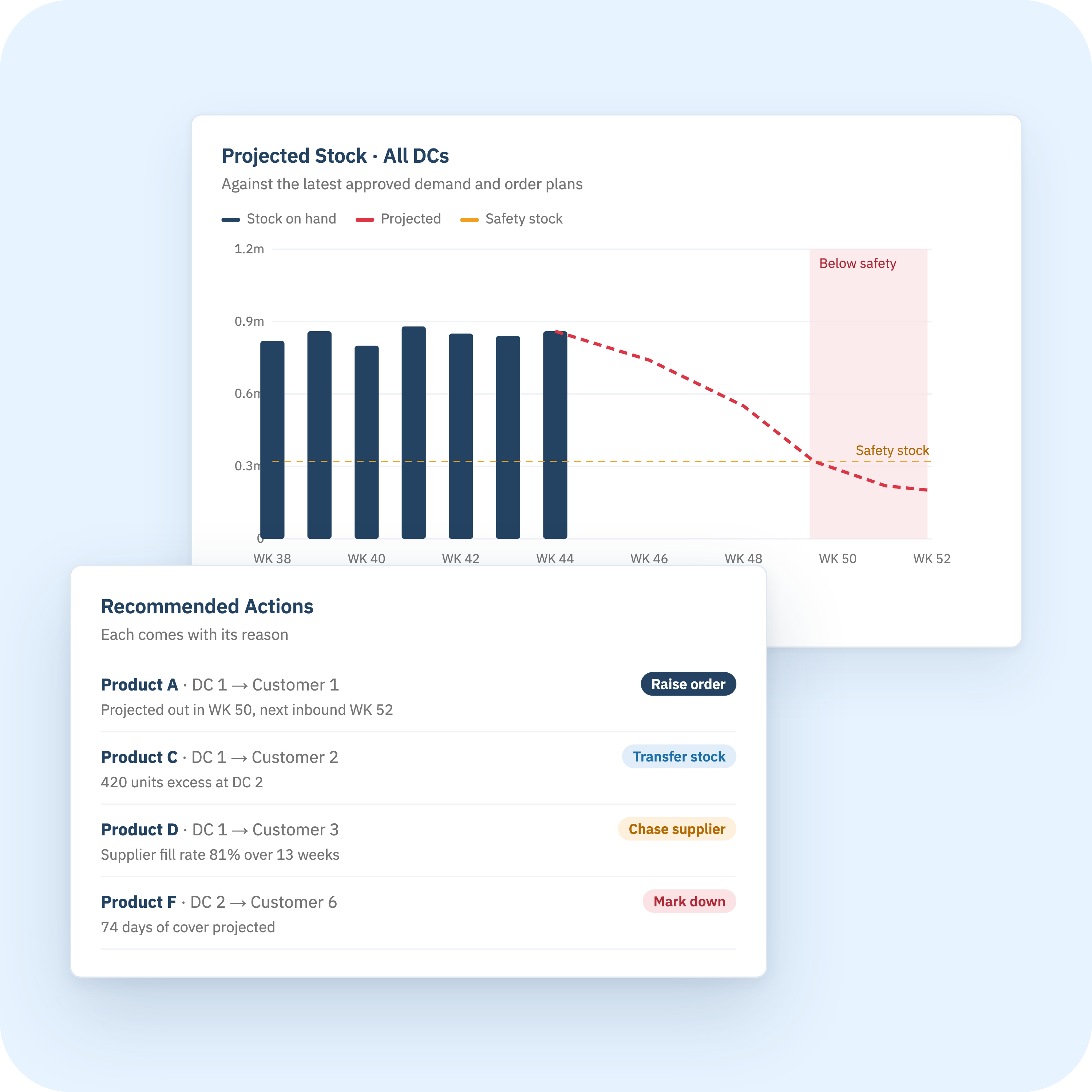
Inventory. Stock is projected forward, location by location, against the approved demand and order plans. Where it is heading below safety stock or building into excess, you get a suggested action and the reason for it: raise an order, move stock between DCs, chase a supplier or clear the surplus.
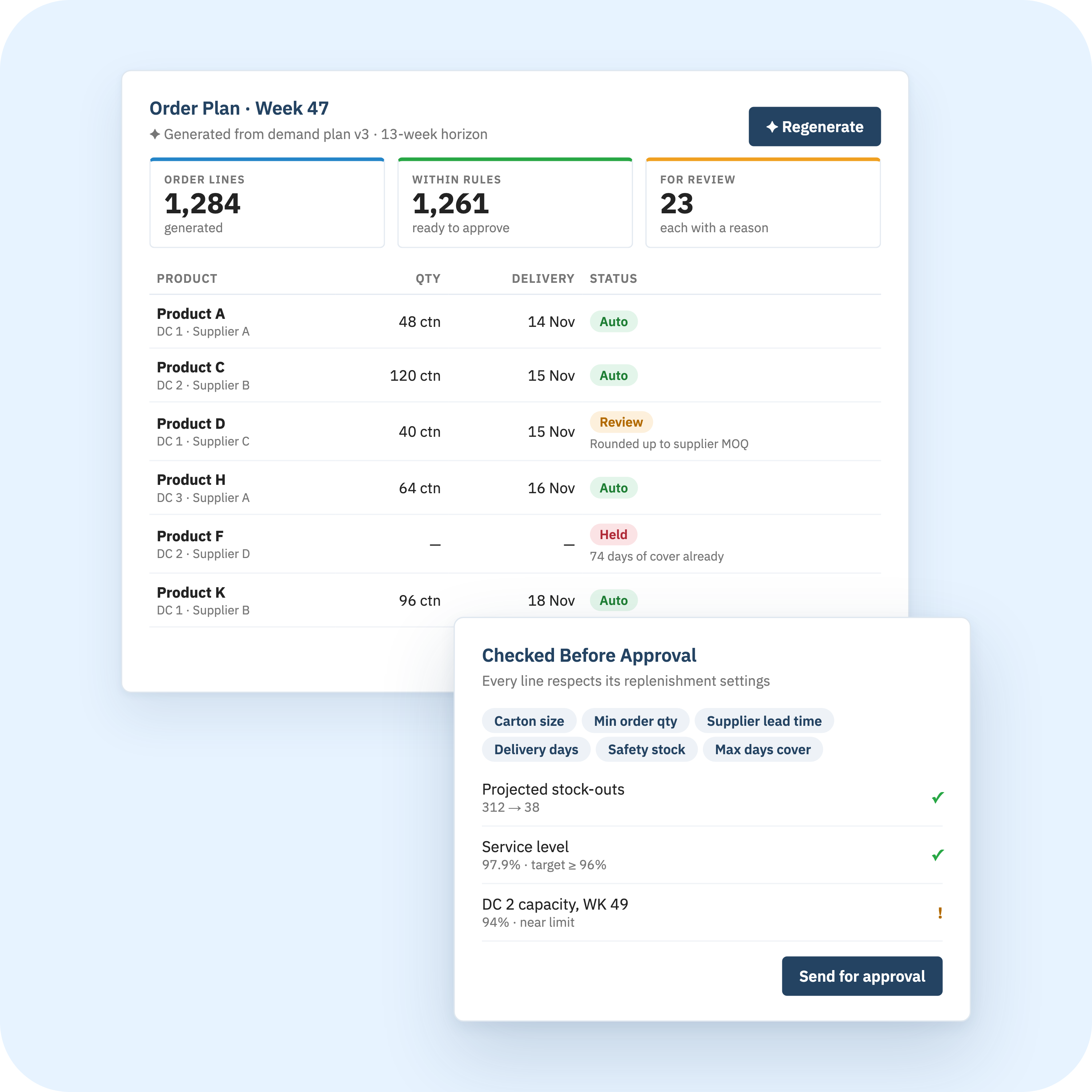
Orders and production. Order plans are generated automatically from the approved demand plan, within each line's carton sizes, minimum order quantities, lead times and delivery days. Many lines can be approved as they stand. The few that aren't come with an explanation, so planners spend their time on exceptions instead of data entry. Approved orders then feed production and materials planning, which means capacity problems surface while there is still time to act.
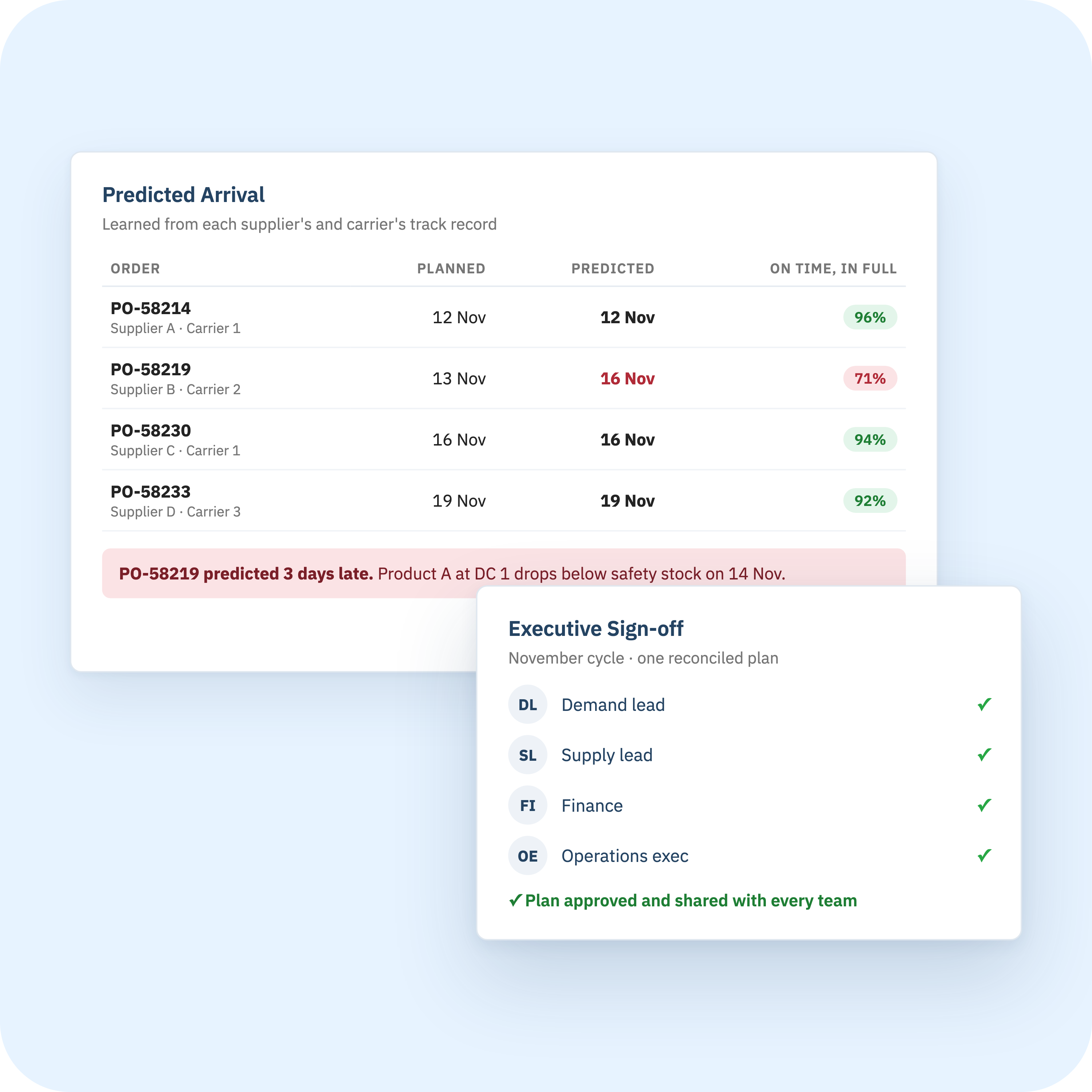
Supply and logistics. Arrival dates are predicted from each supplier's and carrier's track record. A shipment that is likely to land late is flagged early, along with the stock it puts at risk.
Executive sign-off. Leadership reviews one reconciled plan, with demand, supply and Finance's targets side by side and a record of the decisions made during the cycle. With nobody arguing over whose numbers are right, the meeting can spend its hour on trade-offs.
None of this has to be switched on at once. Most teams start with two or three steps, often demand and orders, and connect the rest over time. If you already trust a forecast or an ordering tool, jahanVerse can plan from those numbers and connect to your existing ERP and planning systems.
What Changes
The most visible change is in the week before the meeting. When the plan is connected, a late change from Sales goes back through the plan as a re-run, and nobody rebuilds the pack by hand. The time that used to go on reconciling goes back into the decisions S&OP exists to make.
The numbers follow from better decisions at each step. Across the modules behind the cycle, our clients have seen:
- up to 99% forecast accuracy,
- 98% stock availability,
- waste cut by around half, and
- up to 80% less time spent on planning.
In the strongest S&OP teams, the plan is one model of the business that anyone can question, and the meeting is spent on choices.
Getting Six Teams onto One Plan
S&OP touches more teams than almost any other planning process, so the hardest part is rarely the model. It is getting six teams to trust one plan. That is why change management sits at the centre of how we work. We learn how your current cycle actually runs, train planners and leaders alongside their day-to-day work, and build champions in each team, so the new way of working holds after we step back.
If your S&OP cycle feels like more reconciling than planning, write to us at info@jahan.ai with how it runs today, and we'll tell you plainly whether we can help.